The Sugar Rush Mothers Saw in Sons Who Never Had Any Sugar
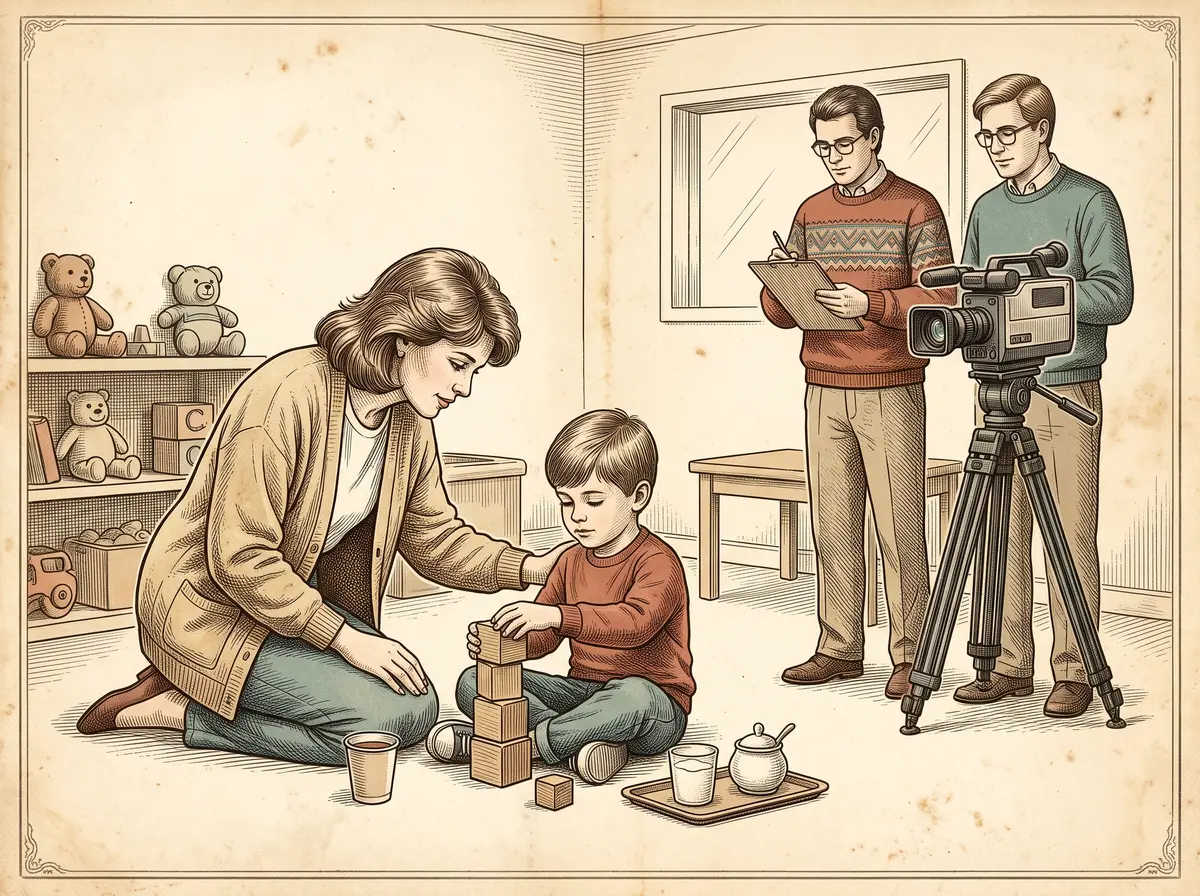
In a 1994 study by psychologists Daniel Hoover and Richard Milich, 35 boys aged five to seven were each given a sweet dose of something, and their mothers were told what it was, or what it supposedly was. Some mothers heard their son had just had a large dose of sugar. On videotape, those mothers hovered closer, and afterward they rated their boys as significantly more hyperactive. There was a small problem with the sugar rush they were seeing: none of the boys had been given any sugar.
By the Curiosities Desk · · 5 min read · Filed under Medicine · Today’s round
Part of The Version Everyone Remembers
What happened: The Sugar Rush Mothers Saw in Sons Who Never Had Any Sugar
By the early 1990s, “sugar makes kids hyper” was less a theory than a fact of family life. Parents saw it at birthday parties and on Halloween night. The idea had grown out of several older strands. In 1947, the allergist Theron Randolph described corn sugar as one cause of what he called “tension-fatigue syndrome” in children. In 1973, the pediatric allergist Benjamin Feingold proposed that artificial colors, artificial flavors, and naturally occurring compounds called salicylates caused hyperactivity. His famous diet targeted additives rather than sugar, but it helped popularize the broader idea that what children eat drives how they behave. In the 1970s, sugar was also blamed for “reactive hypoglycemia,” a supposed blood-sugar crash. And surveys found that the most hyperactive children tended to eat more sugar, though a survey like that can’t tell you which came first.
Researchers began testing the claim the hard way: with blinded trials, in which neither the child, the parent, nor the scientist knows who got the real thing. The cleanest test of a sugar rush is to give some children sugar and others a look-alike sweetener such as aspartame, and keep everyone in the dark.
Hoover, then at the Menninger Clinic, and Milich, at the University of Kentucky, came at it from the other side. They didn’t want to know what sugar does to children. They wanted to know what the idea of sugar does to parents.
They recruited mothers who described their sons as “sugar sensitive.” Every boy got the same thing: aspartame, a sugar-free sweetener. The families were randomly split. Mothers in one group were told, truthfully, that their son had received a placebo, a stand-in with no active ingredient. Mothers in the other group were told their son had received a large dose of sugar.
Then the researchers videotaped each mother and son interacting and interviewed the mothers afterward.
The mothers who believed their boys were sugared up rated them as significantly more hyperactive. The tapes showed something subtler, too. Those mothers stayed physically closer to their sons, which the researchers read as a way of keeping control. They also showed trends toward criticizing their sons more, and looking at and talking to them more, than the mothers in the placebo group. For several measures, the effect was strongest in mothers the researchers judged to be more cognitively rigid, meaning less inclined to revise a first impression.
Nobody in the room was lying or acting badly. These were attentive parents doing what attentive parents do when they think trouble is coming. The trouble just wasn’t in the cup.
Why it was strange: The Sugar Rush Mothers Saw in Sons Who Never Had Any Sugar
We usually picture an experiment as something done to the subject. Here the subjects were, in a sense, the observers. The boys’ behavior was the thing being judged, but the judge’s expectations were the thing being tested, and they turned out to matter a great deal.
It also flips the usual story about evidence. Parents who are sure sugar makes their children wild aren’t guessing. They’ve seen it, many times. Hoover and Milich showed one way that can happen without sugar doing anything: a parent who expects chaos watches more closely, steps in sooner, and notices more of the fidgeting every five-year-old does anyway. The belief generates its own confirmation. It’s a cousin of the problem in Clever Hans: The Horse That Could ‘Do Math’, where the answers were coming from the people watching.
What scientists learned: The Sugar Rush Mothers Saw in Sons Who Never Had Any Sugar
The expectancy study was small, and on its own it doesn’t prove sugar is harmless to behavior. What makes it matter is what came alongside it.
Also in 1994, a team led by pediatrician Mark Wolraich published a double-blind trial in the New England Journal of Medicine. Families followed three consecutive three-week diets: one high in sugar, one sweetened with aspartame, and one with saccharin as a placebo. The study included 23 school-age children whose parents described them as sugar sensitive, along with 25 preschoolers. Even at sugar intakes above typical levels, the authors concluded, “neither dietary sucrose nor aspartame affects children’s behavior or cognitive function.”
The next year, Wolraich, David Wilson and J. Wade White pooled 23 blinded experiments from 16 published reports in JAMA. Their conclusion was the same: sugar, mainly table sugar, did not affect the behavior or cognitive performance of children. They were careful to add that a small effect, or an effect in some subset of children, couldn’t be ruled out. And they suggested why the belief persists anyway: expectation, and the fact that sugar tends to show up at parties and holidays, which are exciting all by themselves. It’s a pattern familiar from The Misplaced Decimal Point That Made Spinach Famous — and Never Existed: a tidy story about food can outlive the evidence by decades.
How it reaches us today: The Sugar Rush Mothers Saw in Sons Who Never Had Any Sugar
The sugar-rush belief is still everywhere, and there are plenty of good reasons to limit added sugar, from tooth decay to long-term health. Hyperactivity just isn’t one that controlled trials have backed up.
The more durable lesson is about method. Hoover and Milich’s design is a compact argument for blinding not only patients but the people rating them. Any study that relies on a parent, teacher, or doctor to judge behavior has to account for what that person expects to see. Modern trials of diets, supplements, and behavioral treatments are built with that in mind. Myths like this one sit on the same shelf as the rest of The Version Everyone Remembers.
If a child’s attention or behavior is worrying you, it’s worth talking with a pediatrician, who can look past the candy jar to what’s actually going on.
Fun fact: The Sugar Rush Mothers Saw in Sons Who Never Had Any Sugar
The sugar-sensitive children in the 1994 diet trial were measured on 39 behavioral and cognitive variables across nine weeks, and not one differed significantly between their sugar weeks and their sugar-free weeks.
Sources: The Sugar Rush Mothers Saw in Sons Who Never Had Any Sugar
- Daniel W. Hoover and Richard Milich, “Effects of sugar ingestion expectancies on mother-child interactions”, Journal of Abnormal Child Psychology 22(4): 501–515 (1994), via University of Kentucky UKnowledge
- Mark L. Wolraich et al., “Effects of diets high in sucrose or aspartame on the behavior and cognitive performance of children”, New England Journal of Medicine 330(5): 301–307 (1994)
- Mark L. Wolraich, David B. Wilson and J. Wade White, “The effect of sugar on behavior or cognition in children: a meta-analysis”, JAMA 274(20): 1617–1621 (1995)
- Medical News Today, “Medical myths: Does sugar make children hyperactive?”
- “Benjamin Feingold”, Wikipedia (background on the 1973 Feingold hypothesis)