Science Through Time · Chemistry
From a Surgeon's Sweaty Hands to a Pen for Your Armpit: A Short History of Deodorant
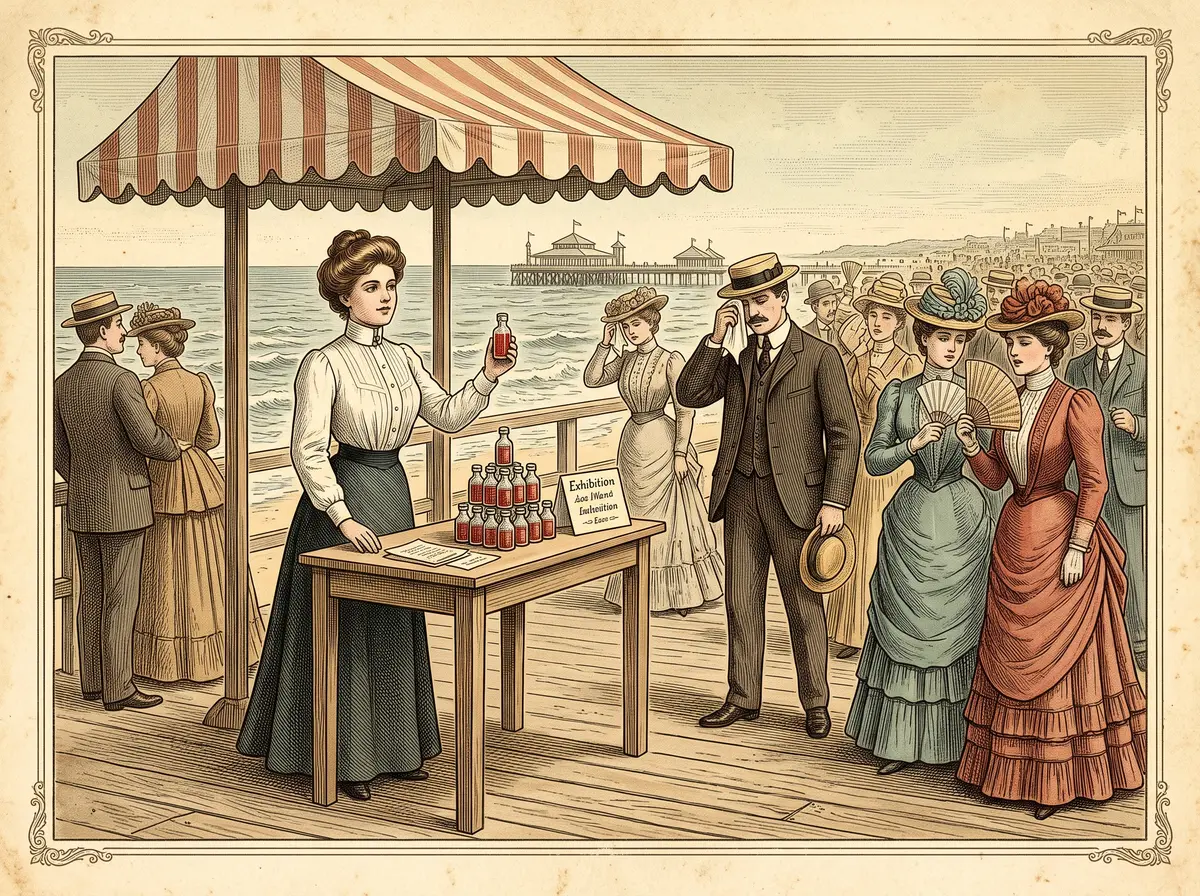
In the summer of 1912, a teenager from Cincinnati named Edna Murphey set up a booth at an exposition in Atlantic City to sell a liquid her father, a surgeon, had mixed up to keep his hands dry in the operating room. Her pitch was that it would also work on your armpits. At first, nobody bought a single bottle.
By the Curiosities Desk · · 5 min read · Filed under Chemistry · Today’s round
What happened: Deodorant
For most of history, people fought body odor with washing and perfume, and fought sweat stains with “dress shields,” fabric pads tucked into the underarms of a garment. In the late 1800s, chemistry started offering a third option.
The first came from Philadelphia. A product called Mum was trademarked in 1888, and the Smithsonian’s medicine collection describes it as the first branded deodorant on the American market. It was a waxy cream sold in a jar and rubbed in with the fingertips. Its active ingredient was a zinc compound that went after the odor itself. Some users complained it was greasy. A competitor called Everdry arrived in 1903 as the first antiperspirant, a product designed to stop the sweat rather than mask the smell.
Then came the Murpheys. Edna’s father, Dr. Abraham D. Murphey, had developed a liquid antiperspirant so surgeons’ hands wouldn’t drip. Edna, then a high school student, tried it under her arms, found it worked, and decided other people would want it too. According to Smithsonian magazine, she borrowed $150 from her grandfather to start a business. She called the product Odorono, a play on “Odor? Oh no!”
Selling it was the hard part. Her early efforts in Cincinnati went poorly, because many people saw the product as unnecessary, possibly unhealthy, or bad for their clothes. At the 1912 Atlantic City exposition, the booth sold nothing at first. But as the summer heat wore on, visitors came around. By the end of the season, sales had reached $30,000, and within a year they hit $65,000, with orders shipping to England and Cuba.
The product had real drawbacks. Odorono’s active ingredient was aluminum chloride suspended in acid, and the liquid was dyed red. It could stain clothing, irritate skin, and, according to customer complaints, ruin a dress, including one woman’s wedding gown. Users were told to apply it at bedtime and avoid shaving first. In exchange, one dose could stop sweating for up to three days.
Murphey then turned to the J. Walter Thompson advertising agency, where a copywriter named James Webb Young took the account. Young had no formal training in advertising; he had previously sold Bibles door to door. His 1919 ad in the Ladies’ Home Journal ran under the headline “Within the Curve of a Woman’s Arm.” It suggested that other people noticed your perspiration and were too polite to mention it. The reaction was immediate. About 200 readers canceled their subscriptions, and some women he knew reportedly stopped speaking to him. Sales rose 112 percent, to $417,000 in 1920. By 1927, Odorono was a million-dollar business, and in 1929 Murphey sold it to Northam Warren, the maker of Cutex nail polish.
Why it was strange: Deodorant
Deodorant did not take off because someone discovered a new medical problem. Plenty of people had sweated for thousands of years without a product. What changed was the conversation. In the words of advertising historian Juliann Sivulka, quoted in Smithsonian magazine, “Nobody talked about perspiration, or any other bodily functions in public.” An ad that broke that silence turned a niche product into a daily habit.
The same trick soon spread. Men, who in the early 1900s were widely considered fine smelling like men, got their own pitch in the 1930s, with ads hinting that body odor could cost them a job. A similar campaign around the same time turned bad breath into a household worry. For that story, see The Floor Cleaner That Taught America to Fear Its Own Breath.
What scientists learned: Deodorant
The products split into two families that are still on the shelf today. A deodorant, like early Mum, targets the smell. Fresh sweat has little odor; the smell develops when skin bacteria break down compounds in it. Deodorants fight those bacteria or cover the result.
An antiperspirant, like Everdry and Odorono, targets the sweat itself. According to the National Cancer Institute, aluminum compounds in antiperspirants “form a temporary ‘plug’ within the sweat duct” that keeps sweat from reaching the skin. Odorono’s early formula needed acid to keep its aluminum salt working, which explains the burns and ruined fabric. It took chemists several decades to develop gentler formulas.
Regulators weighed in along the way. In 1977, the U.S. Food and Drug Administration ruled that aerosol cosmetics containing zirconium, an ingredient used in some antiperspirant sprays, were “adulterated.” The agency cited evidence that zirconium compounds caused granulomas, small lumps of inflamed tissue, in human skin, and that a spray could carry the metal deep into the lungs.
How it reaches us today: Deodorant
The way most of us apply it comes from another invention on the site. Bristol-Myers bought the Mum company in 1931 and later set out to make an antiperspirant lotion. The idea for its dispenser, according to the cosmetics historian behind Cosmetics and Skin, may have come from employee Helen Diserens: a bottle with a rolling ball on top, borrowed from the brand-new ballpoint pen. A 1952 test version, sold as Mum Rollette, jammed, because the antiperspirant made the plastic ball and its ring swell at different rates. After testing hundreds of material combinations, the company launched Ban roll-on nationally in 1955. For the pen that inspired it, see The Strange History of the Ballpoint Pen.
Sticks, sprays, and gels followed. One worry that still circulates, that antiperspirants cause breast cancer, has not held up. The National Cancer Institute says no scientific evidence links these products to the disease, though it notes that a few studies have had conflicting results.
The walk from a jar of cream to the roll-on is one of the long histories in From the First Spark to the Thing You Still Use.
Fun fact: Deodorant
Odorono’s first summer at Atlantic City started with zero sales. What turned it around, according to Smithsonian magazine, was the summer heat itself.
Sources: Deodorant
- “How Advertisers Convinced Americans They Smelled Bad”. Sarah Everts, Smithsonian magazine, August 2, 2012.
- “Alleviating Body Odors”. Smithsonian National Museum of American History, Medicine and Science collections.
- “Ban”. Cosmetics and Skin, a history of cosmetic products.
- 21 CFR 700.16: Use of aerosol cosmetic products containing zirconium. U.S. Code of Federal Regulations (42 FR 41376, August 16, 1977).
- “Antiperspirants/Deodorants and Breast Cancer”. National Cancer Institute.