Strange Animals Scientists Studied · Biology
The Baby-Blue Blood of the Horseshoe Crab That Keeps Every Vaccine Safe
Somewhere on the shore of Delaware Bay tonight, an animal older than the dinosaurs is dragging itself out of the surf to spawn, exactly as its ancestors did before there were trees. It carries, sloshing inside its horseshoe-shaped shell, a liquid the color of a summer sky — and that milky-blue blood is, quietly, the reason the flu shot in your arm didn't give you a raging fever. Almost every injectable drug and vaccine on Earth has been vouched for by the blood of a horseshoe crab.
By the Curiosities Desk · · 6 min read · Filed under Biology · Today’s round
Part of Creatures That Changed Science
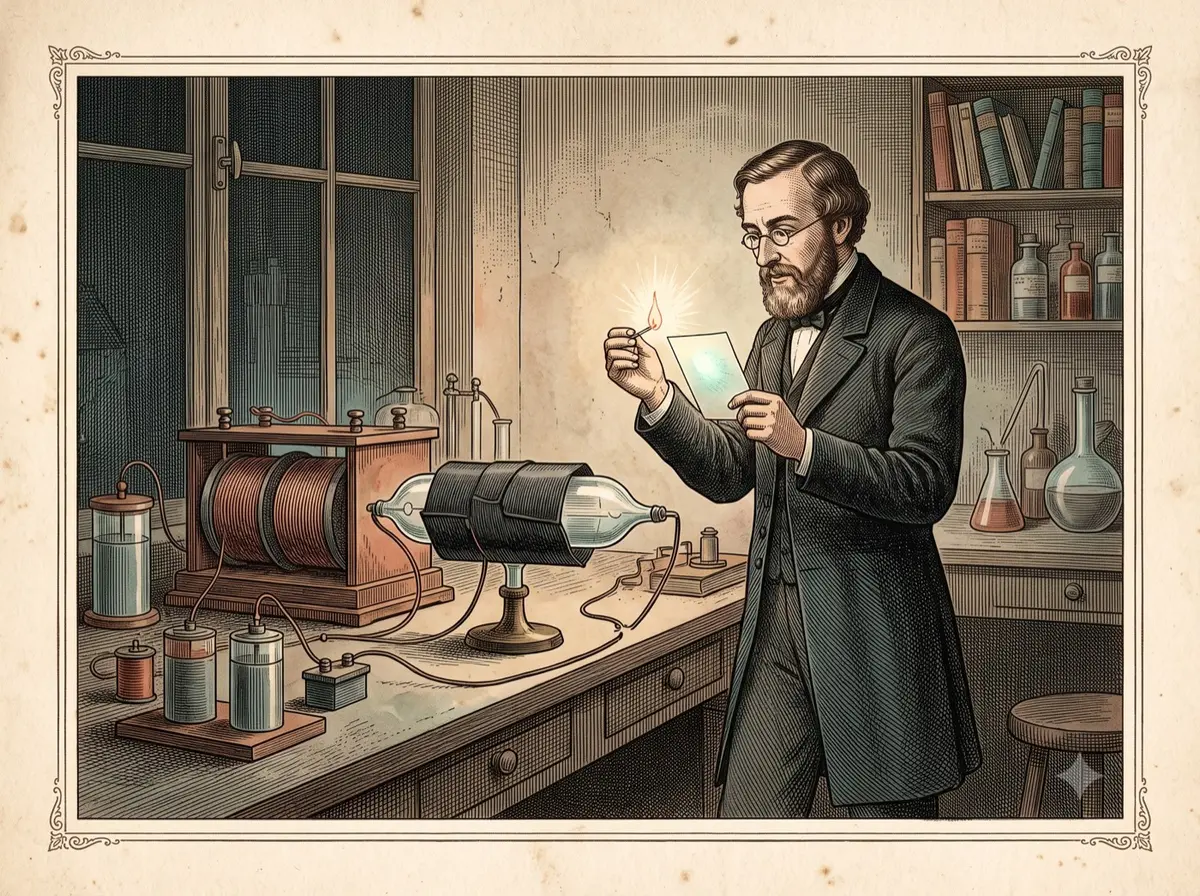
What happened: The Baby-Blue Blood of the Horseshoe Crab That Keeps Every Vaccine Safe
Horseshoe crabs (the Atlantic species is Limulus polyphemus) are not crabs at all. They are marine arthropods more closely related to spiders and scorpions, the last survivors of an ancient order called Xiphosura. They plod along the seafloor from Maine to the Yucatán, grinding up worms and clams with bristles on their legs, and each spring they crawl ashore by the thousands to lay eggs.
In 1956, an American researcher named Frederik Bang noticed something strange while studying them at the Marine Biological Laboratory in Woods Hole. When he exposed horseshoe crab blood to certain bacteria, the blood didn’t just react — it seized up into a firm gel. Even bacteria that had already been killed set off the clotting. Working later with the hematologist Jack Levin, Bang traced the reaction to the crab’s blood cells, called amebocytes, which carry granules of a clotting agent that dumps out the instant it meets bacterial toxins.
That reaction turned out to be extraordinarily useful. The specific trigger is endotoxin — a molecule (lipopolysaccharide) found in the outer wall of gram-negative bacteria, and a substance that can cause dangerous fevers or shock if it slips into the human bloodstream through a contaminated drug. Bang and Levin realized they could bottle the crab’s alarm system. Purified and freeze-dried, the extract became Limulus amebocyte lysate, or LAL. Mix a drop of a drug into it; if the mixture clots, the drug is contaminated. In 1977 the U.S. Food and Drug Administration approved LAL for testing drugs, medical devices, and anything else that touches human blood.
To make it, companies collect wild horseshoe crabs, draw blood from the membrane around the heart, and return most of the animals to the sea. The blue blood is spun down, the cells are burst open in distilled water to release their lysate, and the result is purified into one of the most valuable liquids in medicine.
Why it was strange: The Baby-Blue Blood of the Horseshoe Crab That Keeps Every Vaccine Safe
Start with the color. Human blood is red because it carries iron-based hemoglobin. Horseshoe crab blood carries hemocyanin instead — a protein built around copper rather than iron, present at roughly 50 grams per liter. Copper-based blood is colorless when it’s carrying no oxygen and turns deep blue when it hits the air. So a wounded horseshoe crab appears to bleed sky-blue, like something spilled from a paint can.
Then there’s the animal itself. Horseshoe crabs are living fossils in the truest sense: the oldest known member of the group, Lunataspis aurora, turns up in 445-million-year-old Ordovician rock in Manitoba, and forms nearly identical to today’s crabs were already crawling around long before the first dinosaur. This creature has looked more or less the same since before life had fully colonized the land — and its 400-million-year-old immune trick is now a fixture of twenty-first-century pharmaceutical factories.
The strangest part may be the dependency. A global, high-tech medical supply chain — every batch of insulin, every knee implant, every COVID and flu vaccine — leans on a wild animal’s blood. There is no factory that makes the stuff. It has to be harvested from crabs pulled off a beach.
It shares a shelf with The Naked Mole-Rat: The Cold-Blooded Mammal That Lives Like an Ant and Won’t Age on Schedule, in Creatures That Changed Science.
What scientists learned: The Baby-Blue Blood of the Horseshoe Crab That Keeps Every Vaccine Safe
The crab taught us how an ancient immune system defends an animal with an “open” circulatory system, where blood bathes the organs directly rather than staying sealed in vessels. Without antibodies like ours, the horseshoe crab relies on speed: the moment endotoxin appears, a cascade of enzymes in the amebocytes fires off and gels the blood, walling off the invader before it can spread. Untangling that cascade — enzyme by enzyme, down to the trigger protein called Factor C — is what made a reliable clinical test possible.
Crucially, scientists learned they could eventually copy the trick without the crab. Because the whole reaction hinges on that one protein, researchers cloned Factor C and grew it in genetically modified insect cells. The result, recombinant Factor C (rFC), first became commercially available in 2003 and lights up in the presence of endotoxin just as the crab’s blood does, no animals required. It has been slow to catch on, but regulators have steadily blessed it: rFC entered the European Pharmacopoeia in 2016, and in May 2025 the U.S. Pharmacopeia made a dedicated chapter for recombinant endotoxin testing official — a genuine off-ramp from crab blood.
Also in Creatures That Changed Science: The Teenager Who Sent Two Spiders to Spin Webs in Space.
How it reaches us today: The Baby-Blue Blood of the Horseshoe Crab That Keeps Every Vaccine Safe
Right now, essentially every injectable medicine you might receive has passed an endotoxin test descended from Frederik Bang’s gelled beaker. When the COVID-19 vaccines were rolled out at unprecedented scale, LAL (and its recombinant cousin) sat quietly in the safety pipeline, confirming batch after batch was free of bacterial toxin.
But the reliance has a cost. Hundreds of thousands of crabs are bled each year, and although most are returned alive, studies estimate that somewhere between 10 and 30 percent die, and survivors can be left sluggish and less likely to mate. Blood volume rebounds within about a week, but the cell count can take two to three months to recover. Meanwhile the eggs horseshoe crabs lay on Delaware Bay beaches are the crucial fuel for migrating shorebirds like the red knot, whose populations have crashed alongside crab declines. The Atlantic horseshoe crab is now listed as vulnerable. That is exactly why the arrival of a synthetic replacement matters: it offers a way to keep our medicine safe without draining the animal that made it possible.
Another from Creatures That Changed Science: The 23 Cats the RAF Parachuted Into Borneo to Fight a Rat Plague.
Fun fact: The Baby-Blue Blood of the Horseshoe Crab That Keeps Every Vaccine Safe
The horseshoe crab has given medicine more than its blood. It has nine eyes scattered across its shell and tail, and studies of that primitive visual system helped earn a share of the 1967 Nobel Prize in Physiology or Medicine — work on how the crab’s eye sharpens the edges of what it sees, a process (called lateral inhibition) that also happens inside your own retina as you read this sentence.
Sources: The Baby-Blue Blood of the Horseshoe Crab That Keeps Every Vaccine Safe
- Iwanaga, S. (2007). “Biochemical principle of Limulus test for detecting bacterial endotoxins.” Proceedings of the Japan Academy, Series B. https://www.ncbi.nlm.nih.gov/pmc/articles/PMC3756735/
- Maloney, T., Phelan, R., & Simmons, N. (2018). “Saving the horseshoe crab: A synthetic alternative to horseshoe crab blood for endotoxin detection.” PLOS Biology. https://journals.plos.org/plosbiology/article?id=10.1371/journal.pbio.2006607
- Gorman, R. (2020). “Atlantic Horseshoe Crabs and Endotoxin Testing: Perspectives on Alternatives, Sustainable Methods, and the 3Rs.” Frontiers in Marine Science. https://www.frontiersin.org/articles/10.3389/fmars.2020.582132/full
- IUCN Red List. “Limulus polyphemus (Atlantic Horseshoe Crab).” https://www.iucnredlist.org/species/11987/80159830
- Ecological Research and Development Group. “The Horseshoe Crab: Natural History, Anatomy, Conservation and Current Research.” https://www.horseshoecrab.org/
Related stories: The Baby-Blue Blood of the Horseshoe Crab That Keeps Every Vaccine Safe
- Part of Creatures That Changed Science
- From a Milkmaid’s Blisters to mRNA: A Short History of the Vaccine — From cowpox blisters to mRNA, the long road to immunity
- The Battlefield Maggots That Became a Prescription Medical Device — Battlefield maggots that became an FDA-cleared medical device
- The Jellyfish That Can Reverse Its Own Aging — A jellyfish that can rewind itself back to childhood